I recently had an email exchange with Nathan Muus of BÁIKI, The International Sámi Journal, and he gave me permission to post the following:
Yes my friend grew up in, and still is involved in the Firstborn . . . some of my ancestors participated in "like minded" religious movements in the 19th century in Norway. Home meetings, lay pastors, singing hymns with a one string instrument, suspicion of the Swedish/Norwegian state church and not wanting to pledge allegience to the king- the Laestedian movement was one of a number of such movements, not alone. People forget that.
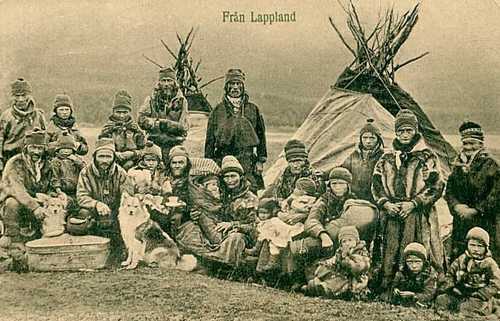
However, the Laestedian movement was Sami led, and there are a number of "positives" to the movement at the time. Some of them are reflected in the Kautokeino revolt, which was Laestedian led also. Sami men were going to the city markets with a year worth of hides, crafts, goods to sell/trade. They were returning back to camp with nothing, no money, drunk..so is said. They were sold alcohol and cheated, taken advantage of. Sami languages were considered worthless, so was Finnish somewhat, by the way. The state church service was in Swedish, or Norwegian, with Latin flourishes. Laestedius deemed that Sami and Finnish were worthy languages to preach in. He deemed that simple was good, hence many people in a village dressing alike in traditional Sami clothing was ok. A simple Sami home or tent, not extravegantly adorned, was normal and was uplifted. I can understand why the movement had such a pull. The Sami traditional spiritual world had been battered for some centuries. This movement gave people an outlet.
I continue to be saddened that denial of Sami cultural heritage/identity today is still there. And I do know it is there. Yet some of the same people will often in their own ways, keep their Sami spirit and identity. I do not for a minute believe academically or otherwise, that traditional Sami spiritual beliefs and practices all were wiped out and went away. Evidence points otherwise to that. However, perhaps some people cannot reconcile the two religious worldviews well, hence continuing denial.
Popular misconceptions do not help either, ie."witches drum"; since when were those using a Sami drum a European style witch? The colonizers had many things wrong. Unfortunately some/a lot of that got transmitted into the various Lutheran church movements also. It's up to all of us to help sort it out. Blessings on your journey! Nathan
You may want to read this fascinating exploration of the impact of Laestadianism on Sami culture. (Among other things, it includes details about "Lapp Mary" that are new to me.)
Does Laestadianism keep Sami culture alive in some way? If so, how?

