"laestadian, apostolic, gay, lgbtq, ex-oalc, ex-llc, llc, oalc, bunner" LEARNING TO LIVE FREE: oalc
Showing posts with label oalc. Show all posts

Thursday, March 28, 2019

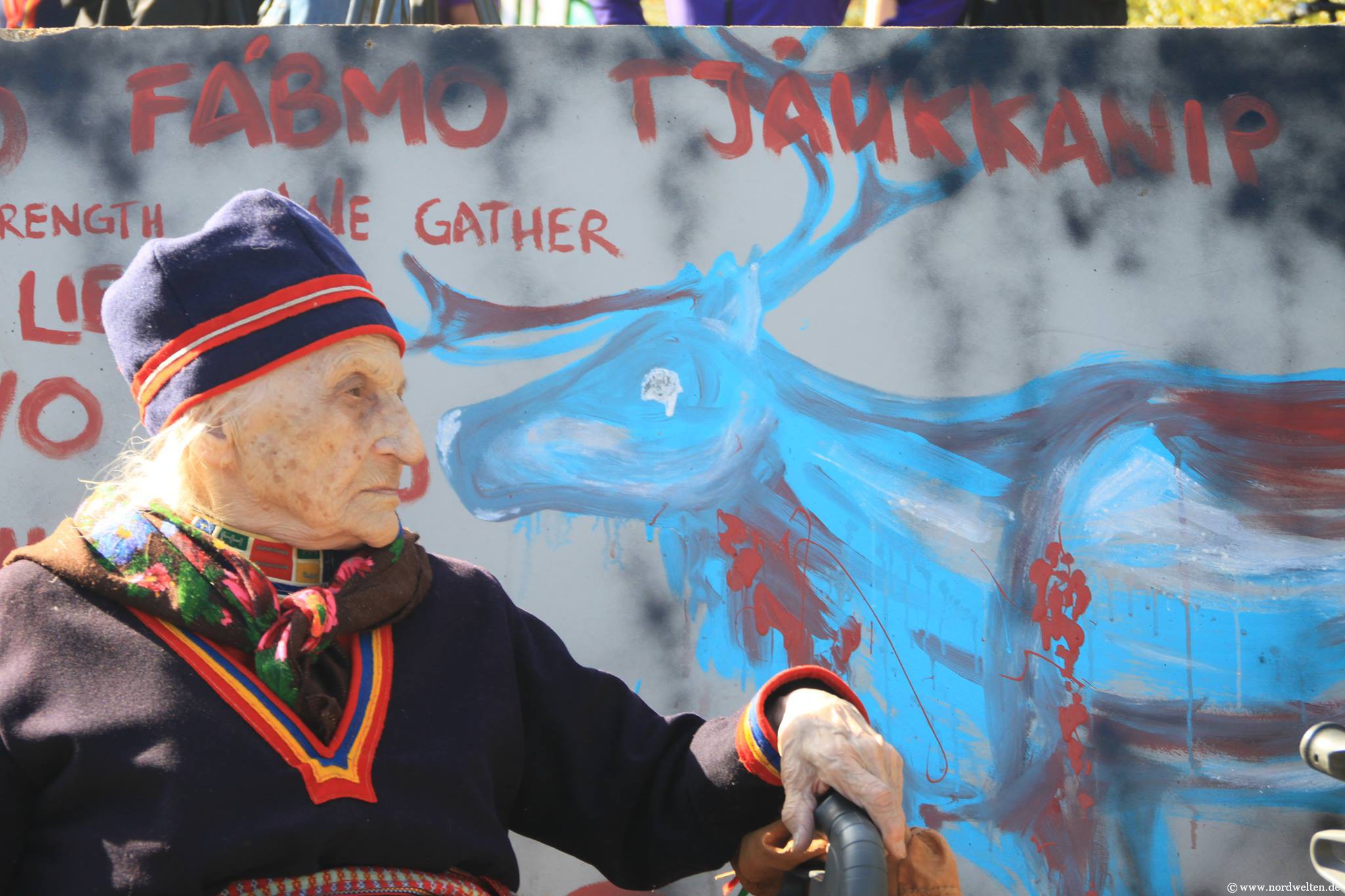
Notable Extoots: Sara Ranta-Rönnlund

Sara Ranta-Rönnlund ©Norrbottens-Kuriren. Fotograf okänd.
I'm fairly certain that when the first crop of Laestadian babies reached marrying age, they looked around, had a think, and all the nonconformers voted with their feet. They emigrated, if not to a new country, to a new community. They left for school and neglected to return. They took temporary jobs that turned permanent, vacations that lasted years and then forever. They left in anger, in joy, in pain, in doubt, in love, in pieces, intact. They waited, procrastinated, debated, heeded bad advice. They took a spouse, a child, a parent, a heresy, a harem. They left shame behind or brought it along, vanished, made the news, made mistakes, made bail, made good.

A few made history.

I'll call them Notable Extoots. Encountering them in my reading, I felt compelled to share a few with you. I think you'll relate, even to those who lived generations and continents apart.

Sara Ranta-Rönnlund, Swedish Sámi Author, 1903 - 1979

Born to a wealthy Talma Sámi reindeer herding family near Jukkasjärvi, Sweden, Sara Ranta-Rönnlund (shortened to Ranta for this profile) had only sporadic schooling, partly because of the Swedish policy restricting Sámi education, and partly because her mother wanted her home, to help with sewing. Ranta's family spoke Sámi, and she taught herself to read and write Swedish. She also knew Tornedalen Finnish (Meankieli), the majority language of the area and of Laestadian services.

Ranta's parents were devout Western (Firstborn/OALC) Laestadians, and her grandfather often hosted Laestadian meetings. In spite of this, and her godparents being "three great Laestadian preachers," she reported that even at a young age, she found the religion intolerant and restrictive. Ranta was critical of the double standards of the preachers and their power over people.

Tuesday, July 03, 2018

Laestadian Divisions (Guest Post)

Following is a guest post from a reader with the pen name IlmarH. If you would like to contribute a post, please email me using the form on the home page. If you would like to discuss Laestadianism in North America (with insiders and outsiders), join this new  Facebook group. —Free

________________________

I am writing from Finland, and am curious to know how recent events in Europe have affected the OALC and perhaps other Laestadian factions. Perhaps readers of this blog could report on the current spiritual weather in North American Laestadian groups. The tumultuous times in America in the period 1880-1900 had an influence in the breaking of the movement here, and more recently the American OALC culture has been a factor in the breach in the European Firstborn flock (separation from the Lutheran Church communion, etc).

I suspect that sooner or later this division will send some waves to the OALC as well.
I find the theological attitudes and arguments on both sides alien at best
There are websites in Finland where the two factions of the Firstborn breach are discussing and arguing, e.g., http://esikoisten.foorumi.eu. I find the theological attitudes and arguments on both sides alien at best, and frequently appalling. My interests and viewpoint are more in the general phenomena of religion-culture-society, interaction of world religions, etc. I am challenging fundamentalism and the fatal neglect and mockery of broad-minded Bible scholars.
 
The main Laestadian faction, Vanhoillislestadiolaiset / SRK (LLC in the North America) has interesting ripples as well. An active blog (https://hulluinhuonelainen.wordpress.com) has reported some of the waves. The blog was initiated by two bright young theologians, Joona Korteniemi and Roosa Tahkola. Korteniemi was a priest in the Finnish Lutheran Church and also an SRK preacher. Some months ago he posted a message that he is giving up his position as a preacher due to differences between his convictions and Laestadian closed-congregation “only us” doctrine. I can imagine that this man has been quite alone, on a raft on open sea. I feel respect and sympathy for him. His blog contains writings of many thankful supporters but is also filled with texts from hot-head believers and narrow-span fundamentalists, and even hostile outbursts. (Unfortunately indicative of the intolerance justified by religious writings—a common plague all over.) 

The next phase of this story is surprising and unusual. Some weeks ago Korteniemi posted a message revealing that he has decided to join the Catholic Church. Some ex-Firstborn friends have sympathized or joined other denominations, for instance the “orthodox” Lähetyshiippakunta (Evangelical Lutheran Mission Diocese). See http://www.lhpk.fi/en/.
Christianity worldwide is in disarray and the main reason is . . . sex
Christianity worldwide is in disarray and the main reason is—how original!—sex / gender / reproduction, particularly the question of female priests, birth control, and attitude towards homosexuals. The crucial ideological rift is between two paradigms regarding Bible interpretation. Fundamentalist groups take every line, phrase, and saying in Bible as divine, untouchable truth that should not be analyzed with human reason, intellectual analysis, or socio-historical research. The other faction respects the Bible as the foundation of our civilization providing moral values and humanitarian guidelines of life, but recognizes the historical processes and cultural evolution that have taken place in the past 3,000 years.


I would like to see some signs of global reforms in Christianity spanning Catholicism, Protestantism, and all Christian denominations. The third millennium of Christianity is unfolding—but how, and in which direction?
 
IlmarH

Monday, June 11, 2018

When a Sin is a Crime — Laestadians & Sex Abuse


If you are a survivor of sex abuse, you may want to skip this post, as it is likely to open old wounds. Everyone else, please read on.

I posted here about Tysfjord in 2016 when the story broke and have been following the updates since then, much of it in Norwegian, using Google Translate to make sense of them. Many of the victims and abusers in Tysfjord are/were Firstborn Laestadian, the corollary to the Old Apostolic Lutheran Church here in America; both follow the same leaders in Gällivare, Sweden.

I've been following the situation with both horror and hope: horror that so many were hurt, and hope that healing is possible -- not only for the Tysfjord victims but for every family, workplace, church, and community yet to be cleansed by the #metoo tsunami.

When I emailed a relative inside the OALC about my hope that the situation in Tysfjord would compel the Gällivare elders to reform church practices, he responded "they would not try to affect natural affairs, as that would violate the doctrine of St. Paul, as he only allows one subject, to preach Jesus and Himself crucified."

Perhaps there was a misunderstanding? Perhaps not. The OALC may well view its silencing of sex abuse victims as virtuous rather than complicitous.

In April, I received a phone call from a friend who grew up in the OALC, a survivor of childhood sexual abuse by an uncle who escaped all consequences in spite of his confession to preachers. Like so many other victims, she was first disbelieved, and then instructed to forgive and forget (if she did not forgive him, the sin would be on her soul). At 27 years old, she had struggled with crippling depression since childhood, and she was calling to tell me of other victims in the church, similarly abused and silenced, some related to her, some not. Her anguish was evident.

What can we do, she asked? Together we talked about possible actions, e.g., bringing a lawsuit for obstruction of justice. Lobbying for a change in the mandatory reporting law to specify lay clergy. Creating a shelter and legal fund to help women in the church to divorce abusive husbands (instead of staying, afraid to lose custody in a church-funded court battle). Filming a documentary on the church. Ultimately we decided to start with a smaller, more achievable project: Youtube interviews of OALC abuse victims. Before I hung up the phone, I told her about Tysfjord, how an entire "Firstborn" community was finding its voice, and why it gave me hope for reforms in the OALC. I mentioned that I was collecting notes for a blog post.

Send me your notes, she said. I emailed them on May 3rd. Three weeks later, she took her own life.

All who loved Kara are heartbroken, and searching for ways we could have helped prevent her death. If you are one of us, may we use that heartbreak to do the work she didn't have the strength to continue.

For the child she was, and the children she loved, I want to believe the tipping point is here.

That point comes, in the words of Tysfjord's Sámi community center director Lars Magne Andreasson, when "the shame of staying quiet about abuse becomes greater than the shame of speaking up."
When the shame of staying quiet becomes greater than the shame of speaking up
The shame of complicity with abusers -- of not protecting the vulnerable -- must prick the awakened consciences in the church. "Faith in the elders" must not be used as an excuse for an individual to avoid personal ethical and legal action. The lay clergy in the OALC are given power most of them did not ask for, and for which few are equipped or educated.

No doubt some preachers are doing the right thing, ethically and legally, if the increasing number of OALC men being prosecuted for sex crimes are an indication (my readers send me news items). But  considerably more "known offenders" remain at large, and the OALC grapevine, and whatever red/yellow/green alert systems any family may adopt, are not preventing their access to victims.

The church leadership in Gällivare must address the systemic problem.

Until OALC elders state clearly that sex abuse is a crime, to be reported to law enforcement and investigated by the state not the church, the cycle of abuse will continue. 

To understand Tysfjord, context is important. For the majority of residents, who are Sámi and Laestadian, the historical trauma of colonization is ample justification for distrusting the state and preferring private, interpersonal resolutions over legal ones. Colonization deprived the Sámi of self-determination, language, land, and culture, and disrupted the social bonds that protected children. Forced assimilation, called "Norwegianisation, was institutionalized from the mid-1800s and within living memory of some Tysfjord residents. How can the state that forcibly separated families be trusted?

“One of the most important reasons why people with Sami background don’t report violence is that they lack trust in the state apparatus. . . (and) the tabooing of sex and body, the silence concerning everything private, and the idea that issues are solved within the family. We find such ideas everywhere in Norway, but there are indications that these taboos are stronger within Laestadian and Sami communities." (Researcher Solveig Bergman, whose 2017 survey indicated Sámi victims of violence are less likely to seek help than Norwegians.)

Laestadianism's exclusivism and gender roles further impede transparency and accountability, making it all the more remarkable for #metoo to succeed in Tysfjord.

A recap:

In 2016, in a community of only 2,000 residents, decades of widespread sex abuse were revealed, sending shock waves throughout Norway and beyond. This came after years of persistence by parents trying to get the attention of authorities, and ultimately, one abuse survivor whose post on Facebook was read by a journalist. That journalist's research culminated in a national newspaper article, which was read by Tysfjord's chief of police, who demanded her deputies conduct an immediate investigation, which revealed 151 sexual assaults over six decades, by mostly male, but also a couple of female abusers. Forty were rapes of young children.

Most of the cases were too old to prosecute.

Nine years earlier, in 2007, desperate parents held a meeting in Tysfjord where local authorities were informed of the scope of the problem. The reaction was disbelief. Nothing more. Victims reporting to church leaders were likewise met with disbelief, or told to forgive and forget. Some of the families in Tysfjord developed their own system of protecting kids: families were assigned red, yellow, or green depending on how safe it was for children to sleep there, or even to visit. Red meant danger of rape or molestation.

It was not until a national newspaper published the article in 2016, and the police chief found it compelling, that interviews began. One thousand of them. Two cases have ended with convictions so far and more are in the pipeline. (The full police report, in Norwegian, can be found here.)

One of the victims said that when she was a teenager in the village, young people told each other about sexual abuse, but adults would not listen. 
"We were called whores and liars." (Nina Iverson, BBC news story)
When Tysfjord's Firstborn leaders were asked to comment, they initially said that preachers conduct their own investigations into sex abuse allegations, and report only when deemed necessary. This was met with outrage.
"The preachers have no prerequisite for making such assessments. It is the police's task." (Former Tysfjord sheriff Kenneth Nilsen)
"I strongly respond to the statements from the church in Tysfjord . . . everybody has a duty to report suspicion of child and youth abuse." (Norwegian Child and Equality Minister Solveig Horne)
The following month, the church issued another statement (here, in Norwegian) disavowing their former release. In a church where "nothing changes," something had changed.

The elders in Gällivare surely know the unintended consequences of certain practices, that the "forgive and forget" tradition effectively colludes with rapists and pedophiles, allowing them to maintain access to the victim. A child is even less likely to report abuse to an adult if she knows she may be required to meet with her abuser and "talk to the preachers," often alone, without her parents.  This is truly inexcusable.

Now imagine a child being required to embrace his or her abuser and say the ritual words granting forgiveness and asking repentance. What did the victim do, to be required to repent? She tempted him. She sat on his lap. She didn't resist enough.

How many victims were compelled to forgive OALC pedophiles before a parent -- often a "worldly" or one whose standing in the church was already compromised -- ignored the advice and filed charges?

State law in America is sadly less protective of victims than Norwegian law, but telling a victim of crime not to report to authorities is illegal everywhere. It's called obstruction of justice.

Will it take a lawsuit against the OALC to change this practice?

Kara thought so.

The average pedophile molests 260 victims during their lifetime. Over 90% of convicted pedophiles are arrested again for the same offense after their release from prison.

"like other sexual orientations, pedophilia is unlikely to change. The goal of treatment, therefore, is to prevent someone from acting on pedophile urges — either by decreasing sexual arousal around children or increasing the ability to manage that arousal. But neither is as effective for reducing harm as preventing access to children, or providing close supervision." (Harvard Medical School)

How many pedophiles remain in the OALC community's good graces, attending church and gatherings, while their victims drifted into isolation, mental illness, drug use, suicide?
Kara's abuser attended her funeral. He sat in the church that protected him, and rejected her, that allowed him access to other victims even after he confessed.
Let that sink in. Do you see anything remotely Christian about that?

According to the Norwegian news service NRK, "tens of victims and their supporters" received threats of violence and reprisals after speaking up. Here in America, we should expect no better. But change is coming.

The municipality of Tysfjord has apologized for its neglect. The Norwegian government pledged monetary support (over $1 million) to increase cultural competence among service providers, to build trust. Big name musicians gathered in Tysfjord and performed, gratis, at a concert affirming Sámi mihá (pride). There were unexpectedly large numbers who attended an interfaith (Lutheran and Laestadian, that is) service in the Tysfjord church. Sámi journalist Kenneth Haetta and three others were awarded the Fritt Ords Prize for their reporting. (Listen to this English-language BBC report on the process of healing.)

Lars Magne Andreasson is optimistic:
"We've come to the point where we dare to have the conversation."
It's past time for American Firstborn, and those who have left the church, to have that conversation. In our homes and if necessary, in the courts.

If you would like to be interviewed for Kara's Youtube series, please send me a note.

It's time to speak truth to power.


Friday, March 30, 2018

The Good Kid (Guest Post)

This is a guest post by a reader I’ll call The Good Kid. If you are struggling with similar issues and would like to talk, let me know on the contact form and I’ll put you in touch with him (privacy assured). —Free

****

Imagine this. You're a good kid. You want to please your parents. You want to do well in school. You want to do well in everything you do, including being a good Christian kid. You try your best to be this good kid because it's the one thing you can control in your life. Your home life isn't amazing. It's actually pretty abusive. But that's beside the point. You go to church pretty much every Sunday. You make sure that you know the answers to the questions that are being asked at the gatherings. You go to young peoples’ gatherings. You travel across the country with the Elders when they're here. You go to confirmation and get yourself a girlfriend, which of course doesn't work because you are too young. You're sad that it doesn't work out, so you date another girl, but that doesn't work either. You still have plans to get married one day, and have kids. You still want to be a good person and give back to others in some way. 

But you're different, and you know that you're different. You grew up with no TV and no movies,  and in a time where you didn't hear a lot about the "different" that you were. Every few Sundays they preach about the different that you are. They tell you that you're going to hell. You're pretty confused, because you know that you didn't choose to be different. You don't understand why you're going to hell, when you seriously try so hard to be so good for so many different people. 


Then, one day, you finally realize that you're tired of being told that you're going to hell. You're tired of trying to be good for everyone else. You're tired of sitting in a building where the preachers are talking about how you're going to hell. You're tired of it all. So you finally decide to walk out the doors of the church. And it is hard! You lose a lot of family members. You lose a lot of your support system. You lose many friends. You lose your faith. You turn to drugs and alcohol because you can at least control how high or how drunk you get. You put "being good" on the back burner for a while. But, eventually, you smarten up and realize that you're not that person. You still want to be a good human being. You want to be you. You've always been you. You were born this way. You are, and always have been, gay . . . AND THAT'S OKAY! 

The BS you were taught was not real. It wasn't true. You can find another church, one that won't condemn you to hell. You can get your faith back if you'd like. You can find friends who will love you as you are. You can still have kids if you'd like. You can still get married if you'd like. You can still give back to society if you'd like. You can get to a point in your life where you finally realize that being gay is the same as being born with black hair, or being lefthanded. It simply is what it is. The men who told you that it was wrong, well, they're simply uneducated. Maybe some of them are gay, too. Who knows?

But let me tell you one thing, you are not alone. Things can get better for you. Don't think that you have to marry someone of the opposite sex and "pretend" to be okay with doing that. You won’t be okay. You won’t be happy.  Your life is too precious for a closet.


I'm here to tell you that there are others just like you.

And you know what? I'm doing just fine.

Tuesday, June 06, 2017

Helena's Story

"What if you were told that reason and questioning can take your faith away? Contraception is a sin, homosexuality is a sin, wearing makeup is a sin, or even having a TV is a sin?"
In this Culture Chat with Mimi Chan podcast, Mimi talks to Helena (one of the bravest people I know, and a dear friend) about leaving Laestadianism, and healing from sexual, physical, emotional, and spiritual abuse.

A few quotes:
  
Control through fear:
"They have a belief that you can lose your faith in an instant. There is a solid amount of fear built in. I remember as a kid feeling scared, what would happen if I lost my faith and then I died, what would happen to me?"

On the need for integrity as the final straw:
"If you don't say anything, you're saying something. And if you do say something, you're going to have to go against your belief system unless your beliefs are in lockstep with theirs." 

On shunning:
"If you were in the church and you're gone, now you're not just a worldly person, you're an evil worker. You're treated with less respect than people who have never been part of the religion."


Tuesday, June 03, 2014

Greta's Story

I want to thank "Greta" for sharing her story. Please consider telling yours.

IF IT'S NOT OKAY

My father was not originally from the church, but joined later on. He was controlling, he was arrogant, he was opinionated, and all of it fit within the ideal that the OALC sets. I went to high school desperate to fit in with the OALC youth, but just couldn't. Among other things, they were racist, they were rude, they were so concerned with materialistic items and who was dating whom that it made me nauseous—nobody cared about doing anything besides sitting in the Fred Meyer parking lot and smoking a cigarette (or five). It was so frustrating that at the age of sixteen, even though I was terrified to my core, I refused to go to church.
 . . . even though I was abused at home and terrified to my core, I refused to go to church.
Of course, there was fallout. There were a lot of talks with my parents, who were disappointed. Then there were the meetings with the preachers, several of whom told me that my desire to play sports and to go to college was foolish, and that I should focus on being a good helpmate for my future husband who would, as one put it, "just be paying off your college debts while you raised the children anyway. Why would you want to put a good man through unnecessary debt?"

But the most important thing about my story—and what I desperately want people to know—is that after I left, I went to college. I graduated, and am now a professional making good money at a job I love. 

The struggle is unimaginable when you are going through it and there is a depth of pain that is almost unbearable. You feel like a failure because you couldn't fit in, you feel embarrassed of yourself and your desires, but the truth is, you were just strong enough to stand up for yourself when what you knew what happening was wrong. 

You saw a group that was fervently bent on a religious ideology that was fundamentally wrong in the way that it was executed and you chose not to stand for it. Instead of standing for constant judgement and rigid rules that somehow dictate whether or not you will be saved, you realized that there was a way to live life with love in your heart for everybody. It is terrifying to leave something that was completely your way of life, but now the choice is up to you. 
. . . you realized that there was a way to live life with love in your heart for everybody. 
I chose to go to college and get a degree. I chose to get engaged to a wonderful man. I chose to be a nondenominational Christian and have never been stronger spiritually. I realized the joy that going to a really good movie can bring. The overwhelming amount of choices you can make is amazing, and though daunting at first, soon you realize that your life is your own. 

You can be free of abuse, you can create the life that feels good for you, and you can still be a Christian. The poisonous lie that exists in the OALC that that church is the one way to get to Heaven is just that, a lie. It can be difficult to realize that those you thought were your family and friends will not recognize you and will still be believing that lie but understand this: they cling to it because they were too weak to see that there is good in all people, not just the OALC, and the word of God is good, no matter what Christian denomination you might be.

Learn to live free, and remember: "If it's not okay, it's not the end."

***

Saturday, October 12, 2013

Three Women and a Girl, Considered

Photo from Wikicommons.
Here are My View's thoughts about her story of the girl in the church restroom.
This story is like the Bible story of the Good Samaritan, where a person was left beaten, and people passed by. But who was doing the beating here? Is it not the very people who claim that they, and only they, are favored by God? 
Did they hear this girl's cry? Do you? Those in the church, can you still walk away as if you don't hear? As if she doesn't matter? After this girl "gets picked up and dusted off," what is next for her and her family? You know that she will always carry this with her. You know that this isn't the last beating that she will take. Not by a long shot. She and her baby will continue to be beaten by the very people who claim that they love her and tell her that all her sins are "forgiven and forever washed away."
Are they really? How is it then, when it comes time to baptize this little one, they say: "Not in church." 
How is it then, when she wants to marry a man from the church, they say: "Not in church. Church weddings are for obedient ones." 
This is what "forgiven" looks like? 
How is it then, when the baby grows up and goes off to school, he comes home in tears because his cousin called him a "bastard child" and told him he was "conceived by the devil?" 
Is that what "forever washed away" looks like? 
How is it then, that the one who introduced her to sex by molesting her when she was a little child, now walks through the church unbeaten, even admired. His "sins" forgiven, forgotten, never to be spoken of again.

I am not trying to destroy the church. There are people I love in it, and I cannot sit by and watch another be beaten down.  I wrote this story to give a voice to a girl who was silenced, to call attention to the hypocrisy, so that maybe another girl, another child, could be spared. Someone must speak up for them. 
But I know my voice isn't enough. What will it take to stop the beatings? Who will be the Good Samaritan?

Tuesday, October 08, 2013

Three Women and a Girl

Photo by Kinnéidigh Garrett, used under CCA 2.0 Generic license
Thanks to "My View" for sharing this fictionalized account of what happened to a teen she knows.
They don't know that I am in one of the bathroom stalls. The church ladies. They don't realize their voices echo around the huge bathroom. They would have realized, if they had stopped to listen. They would have heard my gasp, my stifled sob.  
They are talking about me. The fallen one. The unmarried teen who is pregnant by a worldly. They are speaking in hushed tones, but didn't they know that hushed voices can be heard the furthest? I will find out later that hushed tones can be heard from coast to coast within a few days.  
The loudest woman is saying that she won't let her daughter Sara hang out with me anymore. "Who knows how that girl will influence her?! I always knew she was trouble." 
Another woman says, "I heard that she don't even know who the baby's daddy is. The parents should have kept better control. Shame on her and shame on them! I don't think I want any of my children hanging around any of their kids. Who knows what could happen!"  
A third voice chimes in: "Exactly! It wasn't long ago that my little sweet Billy, he's five now ya know, anyway I overheard him telling his buddy that their Emily kissed him at recess. I was shocked but now I know — it runs in the family. I told Billy to stay far away from her and to never talk to her again." 
Their voices fade as they leave the rest room. My tears come rushing out now. I can't hold them back. I rage at myself:  
"What did I do!? My younger brothers and sisters are going to be shunned because of me. Because I fell for his stupid lies! Because I am evil! Because I am carrying a baby! How will I ever look them in the eye again?"  
I pray: "If you still hear God please don't allow them to be shamed! I will do anything! Just please leave them peace. Shame me, but please, God please, don't let my family suffer."  
I stay in the bathroom until there are no tears left, and my heart feels dry and empty. Only a few people are still in the church as I leave. Over the months my baby grows within me, his strong body shoving aside their words, but they remain, like pieces of shrapnel, leaving permanent wounds.

Friday, September 06, 2013

Musings at Summer's End

Please take a moment to read Valerie Tarico's interview with Ed Suominen about his exodus out of Laestadianism. While my experience does not mirror Ed's (the Bible has always been primarily allegorical for me), and we don't agree on everything, I admire his desire to follow the truth where it leads him. His respect for his childrens' intellectual and spiritual independence is also commendable. And believer or nonbeliever or quasi-believer, regardless of where we tumble in the kaleidoscope of ideology, I think we can all work toward common goals. This quote by Scotty Mclennan, in a comment after the article, is germane:
“All of us—bright atheists and committed religionists—need to wake now and hear the earth call . . . . We need to give and receive as love shows us how, join with each pilgrim who quests for the true, give heed to the voices of the suffering, awaken our consciences with justice as our guide, and work toward a planet transformed by our care.”
85-year old Lule Sami reindeer herder Apmut-Ivar Kuoljok, forcibly removed from protest in Kallak, Sweden, August 25, 2013. Photo by Per-Eric Kuoljok.
Recently, I have been active with Sámi and Sámi-Americans in arguing against a prospective large scale mine in Swedish Lapland near Jokkmokk, where the annual winter market has been in continuous existence for over 400 years (one of my ancestors traded at the first market in 1605). Since Laestadius' time, it has been a significant meeting place for his followers. A mine there would not only negatively impact reindeer herding but put the entire watershed at risk from pollution and dam collapse. You can read the letter we sent to Obama here, and follow its links for more information. Please consider signing the petition against the mine here.

We've had a beautiful summer here in the Pacific Northwest. Unusually warm and sunny. I'm not ready for it to be over, but our enormous katsura tree—that we planted 20 years ago as a twig—is scattering heaps of gold heart-shaped leaves in the back yard, and spiders are seeking refuge in the house, and the kids have returned, a bit grudgingly, to school. Last Saturday, the skies dawned clear, so we drove to Mt. Rainier to soak up the beautiful views and lay down sense memories (pine scent, wildflowers, towering peaks, waterfalls) that would feed our spirits. Mt. Rainier's native name is Tahoma, "mother of waters," as its glaciers irrigate the rivers, lakes, and lush forests of our region (I wish we could go back to calling it by that name. Peter Rainier, the rear admiral friend of George Vancouver, does not deserve the honor). I grew up with a view of the mountain from our living room, and I've been up close many times, but somehow I'd forgotten that near the tree line, the alpine firs look remarkably like those in a model train set. So tiny! The heavy snows that fall here nine months out of the year clearly don't favor breadth or height in a tree. This fact made me muse on adaptation, and how the attributes that protect life in a hostile climate can become superfluous—even counterproductive—in a new habitat. Maybe once transplanted, those same trees would grow tall and broad; at warmer altitudes, they would branch out, leaf out, and exhale, without their limbs snapping in an avalanche. I suspect many former Laestadians can relate.


On Sunday I drove south to spend time with "exOALC," a dear friend whom I met years ago through this blog. Another refugee from the OALC joined us, and we all enjoyed a delicious dinner at Teote (a Venezualan restaurant in Portland), then stayed up late talking. The great thing about meeting people with whom you share a common history is the almost instant sense of comfort. It allows you to bypass the small talk and go straight to the heart of things: joys and struggles, hopes and regrets, dreams and plans. Maybe this is what we miss most about our old communities. It is incredibly gratifying to see us "formers" form our own community.

The next day, Labor Day, I went to the heart of OALC country to meet another former Laestadian, a woman who has blessed this blog with her wisdom for the past decade but whom I had never met in person. I was a bit nervous. I have a lot of respect for her; what if she didn't like me? With one warm hug, my worries vanished. (I would soon discover that her aunt was my mother's bridesmaid, and her grandfather played an important role in my dad's life.) Her husband showed me a sign on their house that reads: "Bigots, homophobes, racists, fundamentalists, etc., please leave your attitudes at the door. This home welcomes everyone regardless of persuasion. Tolerance, civility, and friendship will be observed at all times." They certainly walked their talk, too. Talk about healthy boundaries! There in the middle of an OALC community, such boundaries need frequent defending, and is another reason I am content to live where I do, a three-hour drive away. Close enough to visit, but not too often.

We had a wonderful chat and then my daughter and I took off for an OALC family reunion up in the hills. As we drove winding roads flanked by green and gold fields, with the occasional cows, horses, or alpacas grazing, I felt a profound sense of serenity. The love and acceptance of others is enjoyed in the muscles, I think, like music. It relaxes. It stretches out the knots. I mused on the fact that I no longer dread my family reunions, but look forward to them. I have become comfortable with my status as an oddball, a black sheep, a "worldly." My relatives no longer try to change me, and I don't try to change them. That comfort goes deep.

Our annual reunions are now in the summer rather than the holiday season: it makes the roads less icy and dicey, requires no room rentals, and is more fun for the little kids. There was delicious food (check out the cake by my sister-in-law!), energetic tugs-of-war, sack races, and lots of laughter. I was having so much fun taking photographs, giving underdogs on the swingset, and enjoying my grandnieces, that I was reluctant to leave when our daughter pointed out that it was past the time I'd promised her we'd go. She takes priority.

Of the many foreign words with no equivalents in English, the German word "schadenfreude" is a common example. It means delight in another's suffering. I much prefer it's antonym, the Sanskrit word "mudita," which means delight in another's happiness, or sympathetic joy. As I looked around me at my relatives, all of whom seemed healthy and prosperous (with such beautiful children!), I felt happy for them. Of course I can't see into their hearts. Perhaps some are suffering invisibly. Or perhaps those who are suffering did not come to the reunion. Many, after all, were missing.


As we drove off, I glimpsed a few young people in parked cars. Perhaps they were listening to music, smoking, or just hanging out. Maybe they are talking about their futures, and the future of the planet. I would like to think so. I would like to think that the newest generation of Laestadians can find a way to be more loving, more inclusive, more tolerant of differences, and more accountable to society—and to our shared future.

Maybe this will be the generation that branches up and out without splitting. What are the chances of that, do you think?

Monday, July 22, 2013

Elders' Syndrome and Doubters

I've been hearing from several affected people about a virus in OALC communities called "Elders' Syndrome" coinciding with the visit to the USA of church celebrities elders from Gällivare, Sweden. Symptoms reportedly include:
  • Increase in text messages and calls urging relatives to attend meetings
  • General decrease in TV and music consumption
  • Subtle competition among members for knowledge about, and access to, celebrities elders
  • Decline in OALC children at lakes and swimming pools despite sweltering heat
  • Uptick in pious expressions and use of the word "precious"
  • Rampant repetition of anything sage or amusing said by celebrities elders
  • Numbers of devoted groupies members following the celebrities elders across the country
  • Subtle shifts in what sins are considered important
  • Irrational fear of a "website spreading lies about the precious Christianity"
If you've been affected by any of these symptoms, wait a few months, as they will abate. 

In all seriousness, I am curious about the deference given these gentlemen, and suspect that the elders' meetings are, in addition to social and educational opportunities, a purification rite that helps keep the OALC functioning. This was validated today by a member's comment that she feels "so light and cleansed after the elder's visit, like a really good sauna."

I suspect that they also create an opportunity for doubts, in thinking members, at least, who are likely to turn to the internet for information about the church. In today's New York Times, there's a wonderful story about Hans Mattson, the former leader of the Mormon Church in Europe, who left after his superiors told him not to question the church and not to discuss his doubts, even with his wife. (I'll admit to a moment of schadenfreude that Sweden, which gave us Laestadius in 1800, has to was fertile territory for his American contemporary Joseph Smith, born five years later.)


Mattson: "My hope is that the church will grow larger in acceptance so you are allowed to have doubts . . .  you can go to Joseph Smith and ask, why did he pray? Because he was asking what to do. So he was a doubter, wasn't he? I think that's great. You find answers."


Of course, the same thing can be said of Laestadius. 


He was a doubter. A rebel, in fact.

Saturday, June 15, 2013

Making It Safe to Speak Up

It seems a month cannot go by without my hearing of another case of sex abuse in Laestadian churches. An OALC member was recently arrested for child rape. Over at Imperfect Lady, Beth writes about another sex abuse case in the FALC.

It takes incredible courage for victims to speak up given the is enormous pressure in Laestadian communities to save face, and "just forgive."

If I could, I would have this video, posted on the "Child Friendly Faith" Facebook page, shown to all children. But the sad truth is, not all parents would respond like those in the video. Some would doubt, blame, or accuse the child of lying.


What do you think? What can we do to help make it safe to speak up?

Wednesday, May 22, 2013

Questions OALCers Want to Ask But Can't (Volume Two)

Now for the second part of the big OALC question list from "My View." Please refer by number when commenting, and don't forget to include your name (or alias).


  1. How are songs for the OALC hymnal chosen? Why did the OALC church take some songs out of the hymnal? Why don’t they add new songs? Are most songs are from the 1700’s?
  2. How does the OALC trace its faith back to the Jesus and Apostles?
  3. What was the early church hierarchy and how does it compare to today’s OALC church hierarchy?
  4. Is the theology of Lars Levi Laestadius like that of the OALC today?
  5. Did the OALC change the creed? When and why? Do they use this same creed (“descended into hell in Gethsemane”) in Sweden, Norway and Finland?
  6. Why is the Lord’s Prayer worded differently in the OALC than in the Bible?

Thursday, May 16, 2013

Questions OALCers Want to Ask But Can't (Volume One)

Thanks to "My View" for the following guest post, and to all of you for helping shed light on the mysteries of Laestadianism, American-style. Let's get some answers here!—Free

Even though most OALCers were born and raised in the church, we never paid much attention to its theology, policy, and traditions as we grew up. Some of us, when we get older, tend to take a closer look. It seems to be offensive to openly ask these questions withink the church, however, so we resort to posting them here, and hope to get them addressed.  
I speak not only for myself but for many others. Some of us have left the church, and some of us are sitting in the pews wondering why we are still here, while others are truly just wanting to clarify the teachings from the OALC so we can understand and answer these questions that the world will pose to us. It has been taught to tell the world to “come see,” but sometimes that’s not enough.
    These are questions we have asked ourselves,  or that have been asked of us, that we didn’t have the answers to. Some may seem simple, but we really don’t want the easy, pat answers. We don’t want speech-making rhetorical answers either.  We want the truth. While some questions are obviously answerable by looking into the Bible, we ask them here to clarify the OALC stance. If the answer can’t be found in the Bible, we want a very clear answer and worthy purpose for it. "That’s how we’ve been taught” is not a satisfactory answer.  


    Monday, April 22, 2013

    Falling Stars and Keys

    A reader recently asked about the OALC hymn "O Fallen Star." This hymn and "Keys Are Given to the Christians" are apparently the only ones sung in the OALC that were written by members. "Keys" was written by Fremont Ward, who was either a mason or a Mason, and an adult convert to the faith, if I recall correctly. Maybe cvow knows?

    Who wrote "O Fallen Star"?

    Something tells me it was a woman, and her name deliberately left unknown. Despite Laestadius' own daughter being active in sharing his work and teaching, even traveling on his behalf to different communities, current gender roles in the OALC would hardly allow for a female hymn leader, much less a writer.

    I have a vivid memory of singing this hymn while washing dishes with my sister-in-law, who has a lovely soprano voice and knows how to harmonize (among some OALCers this is a sign of vanity and not to be encouraged). While the tune is pretty, I tend to agree with my friend, who calls the lyrics "good old self-righteousness pretending to be love."

    What do you think?

    O Fallen Star 
    I once beheld a star fall down from Heaven,
    Which ceased to twinkle in the heaven's blue,
    My thoughts go out to all by sin encumbered,
    Who in a world so strange must journey through. 
    CHORUS:
    O fallen star in that far off land, retrace your footsteps to the homeland shore, for Jesus loves you, He calls for you, O fallen star come and shine once more. 
    Down here I often meet upon this journey,
    A soul which once enjoyed sweet peace and rest,
    But now the dark world won his heart to wander,
    A fallen soul lost from the heaven's crest. 
    Take heed you fallen soul as you make sojourn,
    There's found a way that leads back home once more,
    If you would only turn your heart to Jesus,
    You'll find what joys the Father has in store. 
    And so you will be home again my brother,
    Where evermore each star shall firmly dwell,
    With all the blessed saints your voice shall mingle,
    There ne'er again the sun sinks o'er the fjell.

    Update: Here's my short, post-OALC, mixed-metaphors-galore version:

    O Shining Star
    When I behold the stars aglow in heaven,
    Life's source that twinkles in the heaven's blue,
    My love goes out to all by pain encumbered,
    Who in a suffering world must journey through. 
    CHORUS:
    O shining stars in this lovely land, shine for the suffering, from shore to shore, know Jesus loves you, He calls for you, to shine with love here, forever more. 
    Down here I often meet upon this journey,
    A suffering soul who yearns for peace and rest,
    But when we share our burdens and our blessings,
    Heaven blooms within and we are blessed.

    Monday, April 08, 2013

    An Update from 24


    Thanks to "24" for this update about her experience leaving the OALC. If you would like to share your story, join a support group, or suggest a book, please send me an email at extoot (at) gmail (dot) com.
    It has been two weeks since my first guest post and I’m pleased (surprised?) to say that I’m still alive! There have been some good times along with some not-so-good times.
    Following my initial announcement of leaving the OALC (3 weeks, 4 days ago—feels like years), I think my family decided to pretend nothing had changed. Due to a death in the family and having some company in town, I ended up spending a lot more time with them than usual. An all-around busy week with work, school, and family, I was exhausted by the weekend. 
    Deciding to pamper myself, I got a motel after work on Saturday and spent some much needed time alone. Sunday morning I treated myself to some cozy reading at a coffee shop before attending an Easter dinner with a friend. 
    Last week went well—until Thursday evening. It was our congregation’s weekend for Easter meetings, and everybody felt like it was their duty to convince me to come. I dealt with some tears and fears, sadness and anger before I decided to just turn my phone off. Sigh. Everybody’s ideal start to the weekend, right?
    I spent Saturday doing some homework, taking a bath, and calling the police (when I felt my neighbor’s fighting had gotten out of hand). All in all, a success. 

    Today, Sunday, a friend and I found a great crepe restaurant and had brunch. Followed by some good walking and talking, coffee and shopping. Again, a success.
    I guess what I want to say is that it IS possible to leave the church. Easy? No. Possible? YES. I have been seeing a therapist, and plan to continue seeing her weekly. You need to find support, and have some backup—you will need these people (I sure have!). And though I’m not sure what my beliefs are right now, I found myself turning to prayer Thursday evening when I was feeling pretty down.
    There will be ups and downs. I’ve had days where I think a rollercoaster would likely be a smoother ride than my emotions. These days pass. Like I said once, leaving the church is easy—it’s separating from the group, the family, that is so difficult. Be strong, keep your chin up. Enjoy exploring life with eyes newly opened. Don’t feel pressured to determine exactly what your beliefs are—this is part of life’s journey that we are now able to join in. Be free.
    -24

    Monday, March 25, 2013

    Taking Time Off


    This is a guest post by "24," who is sharing her journey with us:

    Today is Sunday—my first Sunday in which I chose to not attend church. I publicly left the OALC on March 13, 2013. Having worked every-other weekend for many years now, it is understood that--due to my job—I'm not able to attend as diligently as most (meaning every Sunday, without fail). This being the first Sunday in which I CHOSE to not attend was a different matter entirely, and I heard about it from my mom via text message. Always the warmest, most kind-hearted person I know, her inner "mama bear" came out and I saw a side of her that I do not at all like. Directed towards me was guilt, guilt, guilt, but she also threw in some choice words regarding my school, work, teachers, and the devil. That was rough. It has been surprisingly smooth sailing up to today, and though I knew that the waters would be troubled at some point, it is still not an easy thing hearing these things from my mom. Even though I am certain that my beliefs are correct and true to me, being confronted (attacked) brings out weakness in each of us. Through my tears I composed a loong reply, which I then deleted. The response I gave was a simple reminder that I could have taken the easy way out and left without a backwards glance (which I did consider for some time), but that it was love for my family that impacted the way in which I was carrying out my decison, truthfully and openly. I received no response.

    Today has opened my eyes in new ways. I realized that I need to start making plans on my Sundays, as that is typically a day surrounded by family. I also think I will be taking some time off from family until they cool their engines and learn to accept who I am. Some of the activities I'm going to start looking into are: find a great restaurant that sells crepes (I've just been craving), visit art galleries and museums, go shopping, meet friends for coffee, find 'walks for causes', some type of fundraiser, find somewhere to volunteer. Any input, advice, or ideas will be greatly appreciated, as well as similar stories. I know that I am not alone, and it has been greatly beneficial to hear from others who have walked in similar shoes.

    Strong, brave, and just getting started—
    24.

    Tuesday, March 12, 2013

    Question About the OALC

    There is a new private support group on Facebook for those from the Old Apostolic Lutheran Church (OALC). If you would like to join, send me an email at extoots with a note about why you're interested.

    I just ran across this "Voice of the Elders" blog and wonder if anyone knows what sect it is affiliated with.

    A recent observation that the OALC is "getting more conservative" made me ponder this comment by "Hibernatus" from a few years back:

    The OALC elders of the Swedish Lapland split into two groups in the middle of the 1960s: August Isaksson, Levi Älvgren and Sten Johansson on one side and Gunnar Jönsson, William Eriksson, Hugo Gustavsson, Evald Larsson and others on the other side. The vast majority of the OALC chose to follow the latter group. However, there were a few hundred in Finland, and some dozens in the US, Norway and Sweden, each, who chose to follow the first mentioned group of elders. 
    This group later split into two, and its membership has decreased over the years. In Norway I think they ended up getting reconciled with the mainstream group, but there are still a couple of hundred left in Finland (in two or three separate groups), and small remnants in the US and Sweden. 
    It's a common opinion among the supporters of the liberal "party" in the Finnish OALC now that the elders of the Swedish Lapland, since the 1980s, have moved more towards the opinions held by August Isaksson, Levi Älvgren and Sten Johansson, abandoning the reform tendencies of Gunnar Jönsson & Co. Their theory is that although most of the OALCers chose to follow Gunnar Jönsson in the 1960s split, many of them still secretly resented Gunnar Jönsson's reform tendencies and clung to the ideas held by his opponents (August Isaksson, Levi Älvgren and Sten Johansson). According to them, the death of Gunnar Jönsson in early 1980s opened the way for his secret opponents to take the power in the OALC. (Actually August Isaksson died before the split was complete, but he played an important role in the events that led to the split and he was clearly on the side of the opponents of Gunnar Jönsson).
    Any thoughts?

    Tuesday, December 18, 2012

    Reach Out, Take My Hand

    I know many of us have on our hearts the senseless tragedy in Connecticut, and many here in Washington State are mourning the loss of a sweet little girl to suicide. May these deaths inspire us to reach out to others, to listen to their pain, to offer solace, and to work toward a society that recognizes and treats abuse and mental illness of all kinds.

    The powerful story below was submitted by a reader.
    When I was 11 or 12, I decided I was going to commit suicide. I took a sleeping bag, a family sized bottle of Bayer Aspirin, and a canteen into the woods, where . . .  I lost my nerve after a few hours. I left all of these items in the forest, and if my mother ever looked for the sleeping bag, the aspirin, and the canteen, she never questioned why these items were missing. 
    I lost my nerve because, according to church doctrine, I could not determine if I had reached the age of reason, and in taking my own life I would go to hell. Sermons gave conflicting opinions. Our believer friend “Lasse,” who we all consulted regarding spiritual matters, thought it was age 20, but some ministers said confirmation age, and another believer thought it could be as low as age eight. I did not want to take any chances on hell, so I did not kill myself. 

    Wednesday, December 12, 2012

    Laestadian Christmas Memories

    Christmas can bring up feelings of loss for former Laestadians, no matter how long we've been gone. Until I met my husband, I was either solo at Christmas, or an awkward, grateful guest at a friend's house. Whether I was dining on Chinese or Thai food, or sitting in quiet admiration of my friend's tight-knit families and unfamiliar traditions, I was unsteadied by grief, and couldn't wait for the new year to begin.

    Christmas is all about family, and I didn't have one. Not one that wanted me, at any rate.

    Friday, December 07, 2012

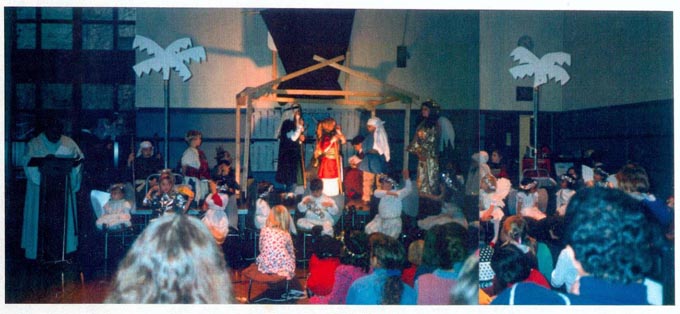
    The Christmas Program

    Three years ago, I attended the Christmas program of my younger children’s elementary school, my head swirling with cognitive dissonance over what I was reading in the Bible and church publications. One of the issues that stood out in my mind, as it does for so many troubled believers, was Conservative Laestadianism’s outrageous exclusivity claims. (These claims are also made by the OALC, FALC, and IALC, who all point their bony fingers of condemnation at each other along with the LLC/SRK.)

    Here it is in a nutshell: The church’s membership comprises about 0.002% of the world’s population. Everyone else who is mentally competent and has achieved some vaguely defined age of accountability it consigns to an eternity of screaming torture, a fate that eventually will be shared by almost all of the billion or so of the world’s children. There are even questions about many of those within the official membership nowadays. I suspect the old guard in the SRK and LLC have been waiting quite a while now for another “heresy” to come along and clean house, freeing them from having to deal with those annoying liberals, part-timers, and questioners.

    That evening I sat with my wife and watched our kids up on stage, saying their pieces and singing their little songs among the beautiful children and parents of a rural, simple, and fairly religious community. As it is most everywhere else in the U.S. and the world, none of them has ever heard of Conservative Laestadianism. The closest most will ever come to a member of “God’s Kingdom” is in their cars as they drive through the area where most of our old congregation’s members live, on their way to do some shopping in town.

    Here’s what I wrote when we got home. It is reproduced from my book (§4.2.1), as is some of the commentary that follows (pp. 82, 84‑85, 242 of the printed version).